Dust has a way of clinging to the acacia thorns in Uganda’s West Nile. It catches on the rough fabric of a ranger’s trousers and tangles itself in the memories of a long, heavy stillness. For decades, the Ajai Wildlife Reserve was a place of ghosts. The rhinos—once the undisputed chiefs of these open grasslands—had vanished, victims of gunfire and a global greed for their horns. By 1982, the count was zero.
Now, the silence is finally shifting.
Rhinos in Uganda : A Quiet Conservation Win
On January 5, 2026, the first four southern white rhinos were moved from the Ziwa Rhino Sanctuary back to the Ajai Wildlife Reserve. This carefully managed journey marks the historic return of the species to this soil after more than 40 years. These four pioneers are just the beginning; they are the first of a larger plan to relocate 20 rhinos to Ajai, re-establishing a wild population meant to breed and grow naturally across northern Uganda.
A Long Road Back
The four pioneers began their journey as part of a group of eight rhinos donated by African Parks from South Africa’s Munyawana Conservancy in late 2025. Their relocation, coordinated by the Uganda Wildlife Authority (UWA), is part of a national strategy to expand the rhino’s range and reduce the biological pressure on the single sanctuary at Ziwa.
Once these initial animals settle into their new rhythm, sixteen more will follow. This deliberate pace reflects a specific Ugandan conservation philosophy: it is patient, highly technical, and rooted in earned trust.
Why this moment matters
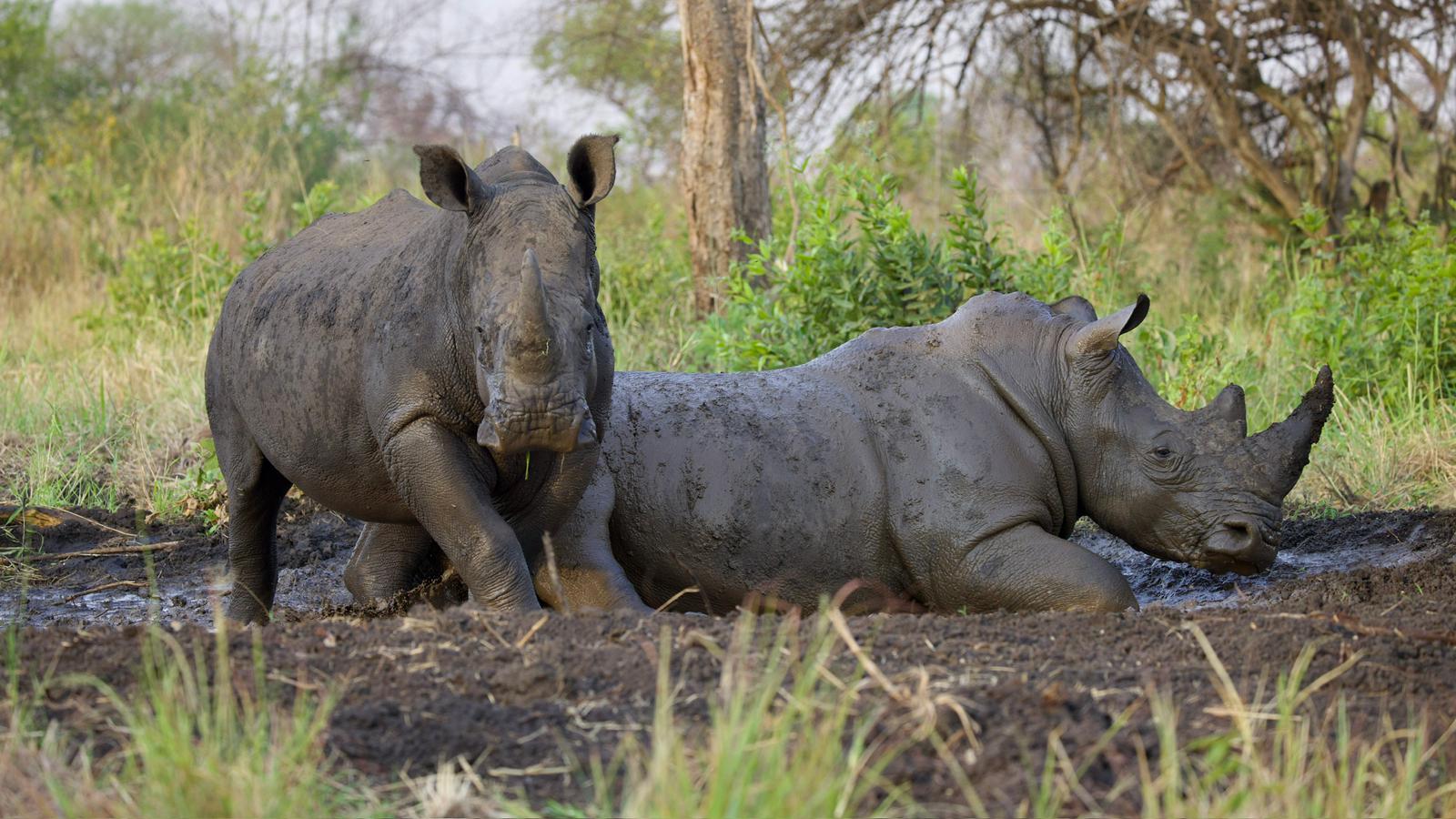
Uganda’s rhino recovery is not a loud spectacle. It is a work of careful design. At Ziwa, the current heart of the operation, armed rangers guard the animals day and night across 27 square miles of thickets. Visitors here can track them on foot, walking behind guides who read the bush like the pages of a well-worn book. They watch for signs—droppings, fresh tracks, or the slight twitch of an ear—until a shape that looked like a grey stone suddenly exhales.
Ziwa now counts 59 rhinos, a number that grows steadily each year. For the traveler, this is conservation you can touch. Each tourist permit funds a ranger’s wage, and each step on the trail reinforces their protection. It is a model where tourism directly sustains survival. Reintroducing these animals to Ajai simply expands that safety net. By spreading the population across multiple reserves, Uganda builds resilience; if one area suffers a setback, the species is not lost with it.
Chief Ajai’s Legacy and the Roosevelt Connection
The relocation is tied to the Roosevelt Rhino Campaign, named after Theodore Roosevelt’s 1909 expedition through Uganda. Roosevelt’s trek opened American eyes to the beauty of East African wildlife, but his expedition also thinned rhino numbers significantly. Today, the campaign turns that history into a new kind of meaning: survival, not hunting, is the goal.
However, the reserve carries a much deeper local legacy. It is named after Chief Ajai, a regional leader whose foresight helped protect these animals long before modern conservation existed. Following Roosevelt’s 1910 visit to his palace—which saw a sharp decline in the local rhino population—Chief Ajai restricted hunting in his domain. He recognized the vulnerability of the giants under his care.
His leadership led to the formal establishment of the reserve in 1937. By the 1960s, Ajai sheltered 60 white rhinos—nearly the entire population left in the country. Though poaching later erased them, the reserve’s name remains a reminder that conservation here is not just an imported policy; it is rooted in local responsibility.
A Pulse Returns
When the evening light spills across the Nile, touching the fan-leaved palms, a heavy thud echoes from the Ajai forest. It is not just the sound of a 5,000-pound animal moving through the brush. It is a pulse returning to the land.
Uganda’s rhino story reminds us that in a world of fast-paced headlines, the most important victories often come quietly. They are built on patience, historical respect, and the courage to let nature lead the way back home.
“In a world of fast-paced headlines, Uganda chose the long game. They didn’t just ask for rhinos back; they spent twenty years proving they could keep them safe.”
What rhinos in Uganda mean for travelers
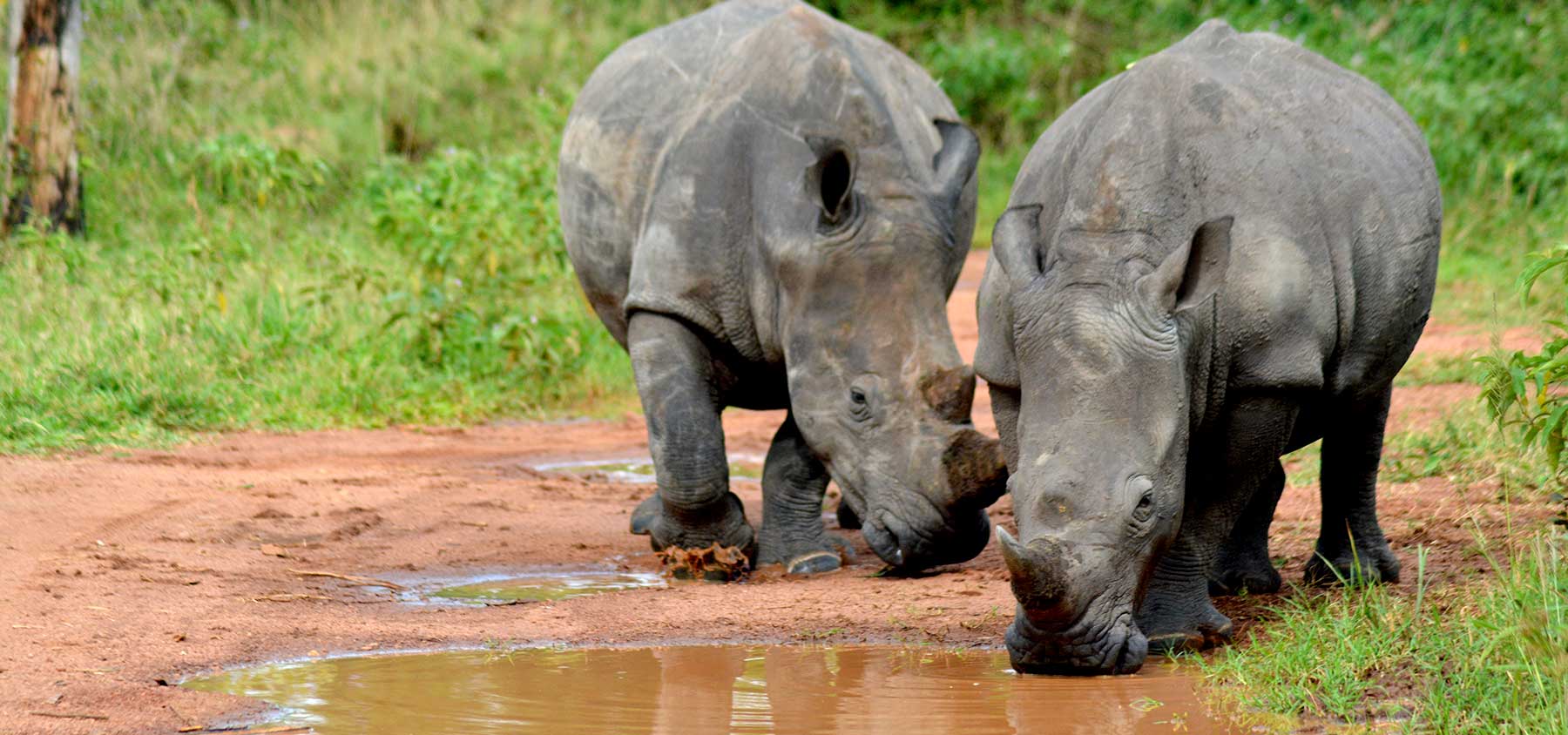
For travelers who care about impact, Uganda’s rhino story matters. Conservation here is not funded by donations alone. Responsible tourism plays a role — through park fees, community employment, ranger support, and long-term lodge partnerships.
Experiences like rhino tracking at Ziwa or extended safaris in Murchison Falls National Park connect travelers directly to this system. You are not just observing wildlife; you are helping sustain it.
This story reflects the values many of our guests care deeply about — measured growth, strong institutions, and conservation that benefits both nature and local communities. That rhinos in Uganda are on a recovery journey, adds a rare dimension to a classic safari route, pairing big landscapes and wildlife with hands-on conservation experiences that feel personal and meaningful.
A natural next step
For many of our guests, a visit to Ziwa or Ajai Wildlife Reserve fits naturally into a wider northern Uganda journey. Rhino tracking pairs well with time in Murchison Falls National Park, where savannah, river, and forest meet — and where conservation success is visible on a much larger scale.
At Nandi Adventures, we design these journeys thoughtfully, making space for both wildlife encounters, communities, and the stories behind them.
Sometimes, the most powerful travel experiences come from places that chose patience over spectacle — and let nature lead.
Chief Ajai—The Local Guardian
- Who he was: A prominent leader and chief in Uganda’s West Nile who held authority over vast hunting grounds.
- His role: After witnessing the impact of early 20th-century expeditions, he implemented strict measures against poaching.
- Legacy: His stewardship was recognized by the government in 1937, leading to the creation of the Ajai Wildlife Reserve. Chief Ajai gave up some of his own lands to include in the reserve.
- Why it matters: The return of rhinos honors a leader who recognized the value of wildlife for future generations over a century ago.
The Giant Under the Armor — Rhino Essentials
- African rhinos—both the black and white species—are far more complex than their “tank-like” appearance suggests. While they may look like prehistoric relics, they are highly sensitive, social, and specialized survivors. As you watch them move through the Ugandan scrub, keep these fascinating traits in mind:
- The Name Game: Interestingly, both species are actually grey. The “white” rhino’s name is likely a mistranslation of the Afrikaans word wyd (wide), describing its broad, flat lip perfect for lawn-mower style grazing. The “black” rhino, by contrast, has a pointed, prehensile lip designed for plucking leaves from high branches.
- A “Crash” of Personality: A group of rhinos is aptly called a “crash.” While they can be solitary, these social gatherings are often centered around communal dung piles known as middens. These act as the savanna’s “social media hubs,” where rhinos leave scent-based messages to communicate territory and health to others.
- Composition of a Legend: That iconic horn isn’t bone—it’s made of keratin, the exact same protein found in your own hair and fingernails.
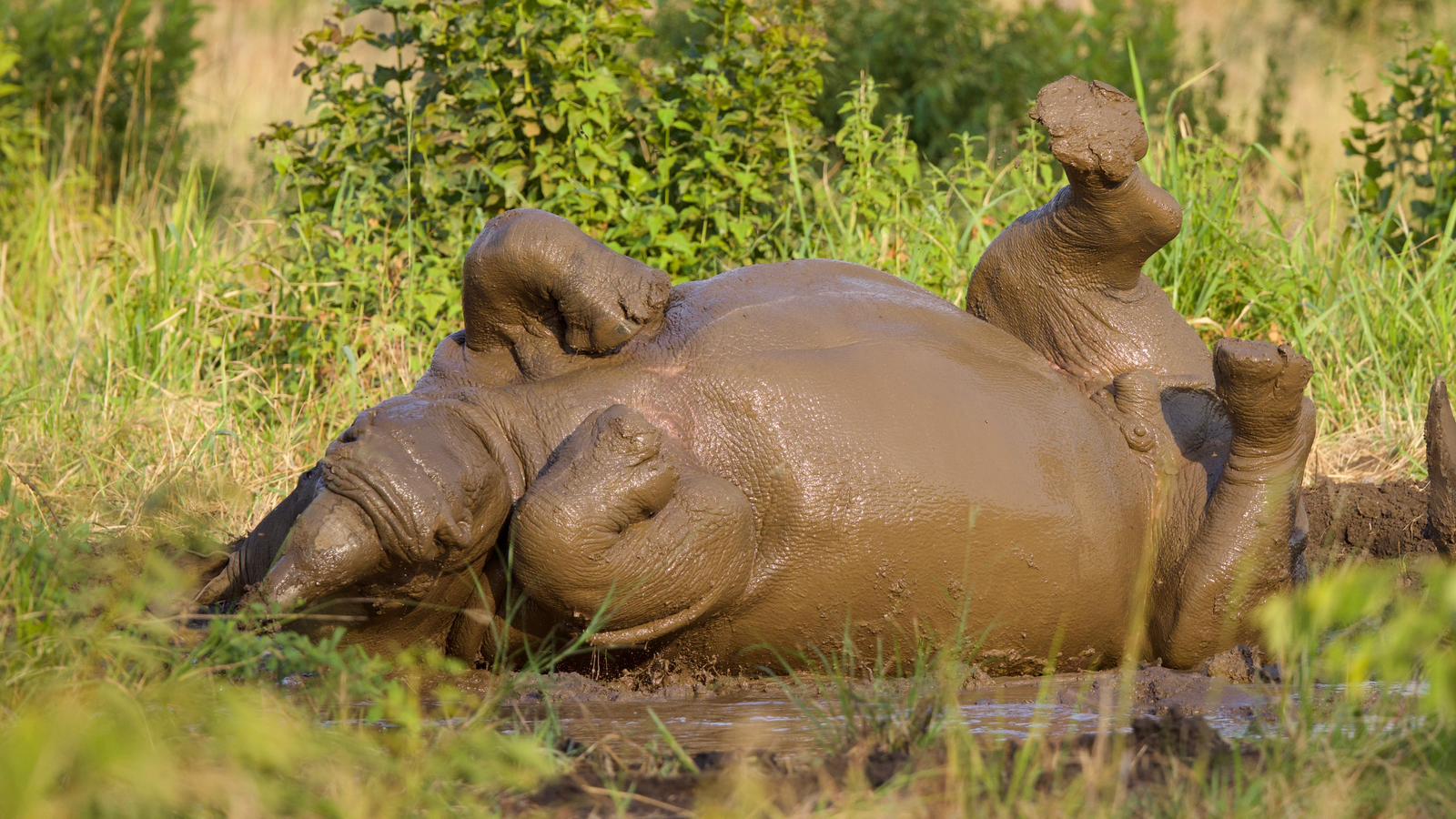
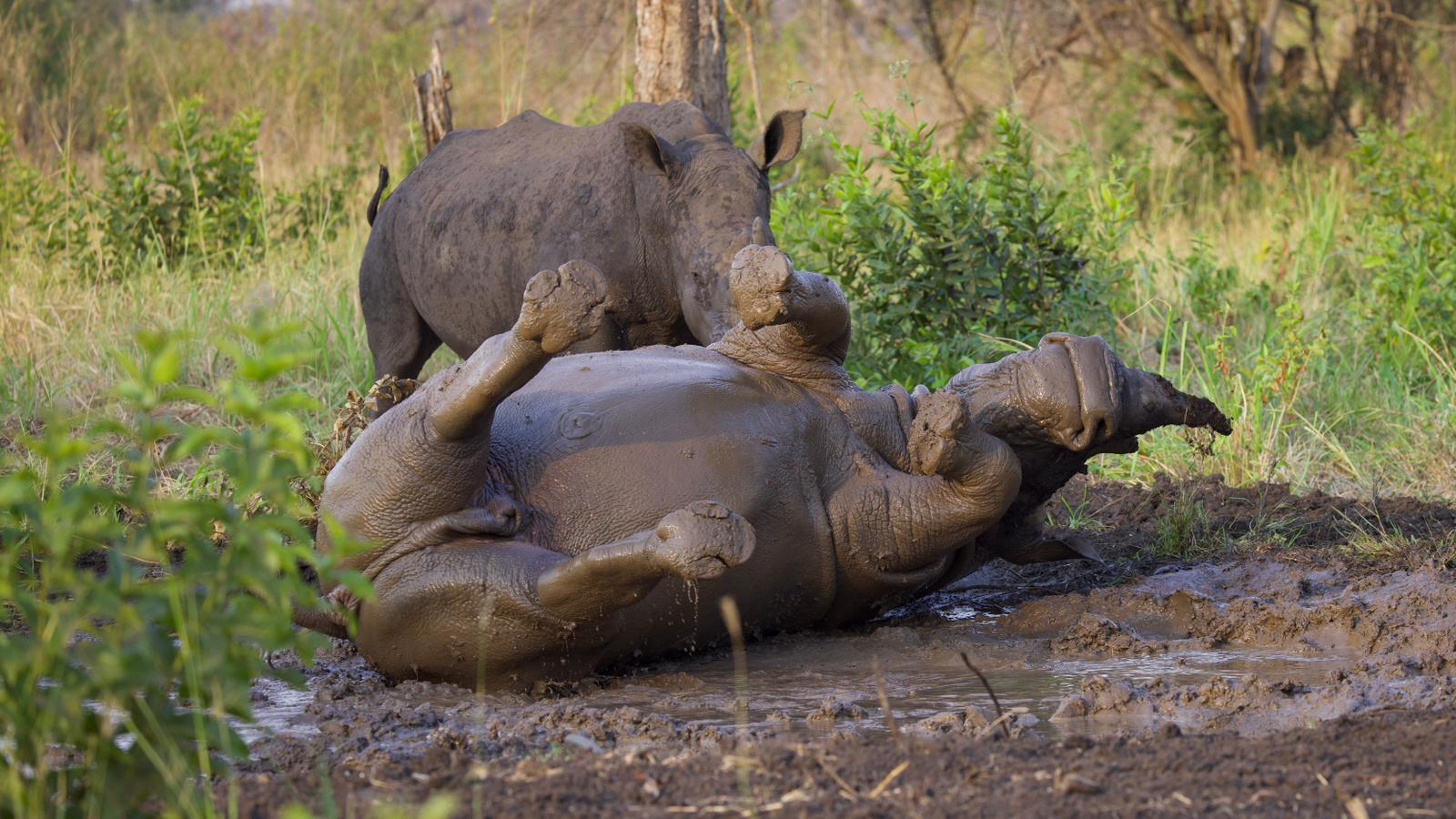
- The Mud Spa: Their skin may look like iron plating, but it is surprisingly sensitive to sunburn and biting insects. To combat this, rhinos are frequent visitors to mud wallows, creating a “built-in sunscreen” that keeps them cool and protected.
- Blindly Powerful: A rhino’s eyesight is quite poor; they struggle to see a stationary person just 30 meters away. To compensate, they possess an acute sense of smell and a symbiotic relationship with oxpeckers (or “rhino birds”). These birds feast on ticks and act as a living alarm system, screaming to warn their hosts of approaching danger.
- Speed & Scale: As the world’s second-largest land mammal, a white rhino can consume up to 50 kg of grass in a single day. Don’t let the 5,000-pound (2,300 kg) frame fool you—if they need to move, they can sprint at a staggering 30-40 mph (48 km/h).
- Unexpected Kinship: Evolutionarily, rhinos are odd-toed ungulates. This means their closest living relatives aren’t elephants or hippos, but rather horses and tapirs.