The cost of a private Uganda safari depends on five main things: permits, lodge level, itinerary length, routing, and travel season. Gorilla and chimpanzee permits are fixed conservation costs. Accommodation, flights, vehicle days, guiding and park activities then shape the final price. A short gorilla safari costs less than a full Uganda journey, while luxury lodges and fly-in routing increase the investment.
Many travelers ask: “Why does one Uganda safari cost more than another?” The answer is usually not one thing. It is the combination of permit costs, lodge choice, distance, number of guests, and how carefully the journey is paced.
At Nandi Adventures, we quote private safaris as complete journeys rather than a list of disconnected services. That allows travelers to understand the real value of the experience: planning, permits, guiding, transport, lodge selection, guest care and operational support on the ground.
What Is Usually Included in a Private Uganda Safari?
A well-built private safari usually includes:
- Private 4×4 safari vehicle
- Professional driver-guide
- Accommodation
- Meals as specified
- Park entrance fees
- Gorilla and chimpanzee permits where included
- Boat safaris and selected activities
- Airport transfers
- Ground handling and local support
- Domestic flights where quoted
International flights, travel insurance, visas, tips, personal expenses and some premium activities may be quoted separately.
The Biggest Cost Factor: Gorilla and Chimpanzee Permits
Gorilla trekking is one of Uganda’s most valuable conservation experiences. The permit is a fixed cost, not something a tour operator can discount. It gives access to a regulated trek and a limited time with a habituated gorilla family.
Chimpanzee tracking also requires a permit. Kibale National Park is usually the premium chimpanzee destination, while Kyambura Gorge can work well when the safari route already includes Queen Elizabeth National Park.
Permits are often non-refundable and must be secured early, especially for peak travel months. This is why serious safari planning should begin before accommodation is fully committed.
Uganda Permits:
Gorilla permit: USD800 per person (1 hour with gorilla family)
Chimpanzee permit: USD250 per person
Gorilla habituation permit: USD1500 per person (4 hours with gorilla family)
Rwanda Permits:
Gorilla permit: USD1500 per person (1 hour with gorilla family)
Lodge Level Changes the Safari Cost
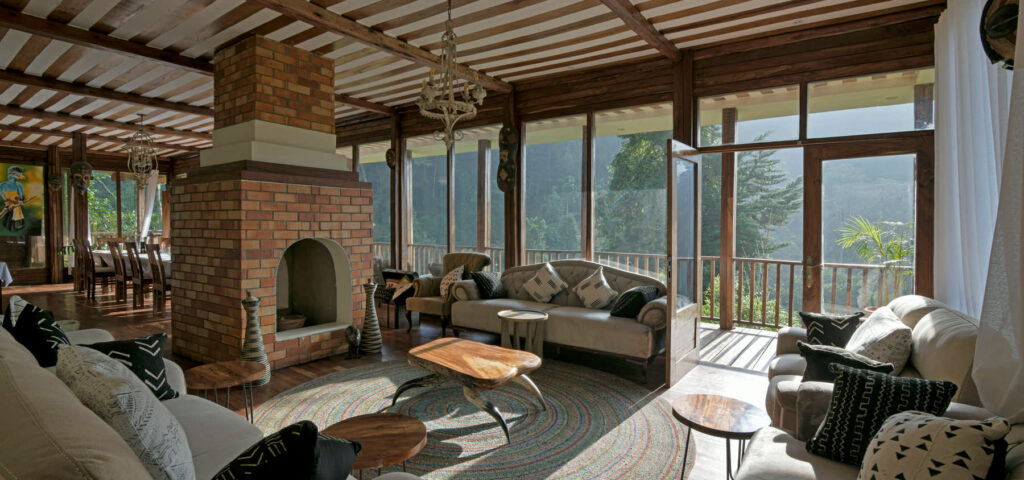
Accommodation is the most flexible part of the safari price.
Premium 4-Star
Comfortable lodges, good guiding, strong locations and warm service. This is often the best value for travelers who want comfort without extreme luxury pricing.
Luxury 5-Star
Higher-end lodges, stronger design, better views, refined service, more privacy and excellent food. This level suits honeymooners, senior travelers and couples looking for a polished journey.
Signature Luxury
The highest lodge tier, often with exceptional architecture, privacy, guiding, wellness and location. This is for travelers who want the lodge to be part of the main experience, not simply a place to sleep.
Private Safari Cost Also Depends on Group Size
A private safari for two people costs more per person than a private safari for four or six because the vehicle, guide and operational costs are shared by fewer guests. Families and small groups often receive better per-person value because fixed costs are spread across more travelers.
This is why a quote should always ask for the number of guests and rooming plan before giving a realistic estimate.
Routing Matters
Uganda’s safari destinations are spread across the country. A route that includes Entebbe, Murchison Falls, Kibale, Queen Elizabeth and Bwindi will cost more than a shorter Entebbe–Bwindi fly-in safari because it includes more days, more park fees, more accommodation and more guide time.
Fly-in safaris can increase the direct cost, but they can reduce fatigue and save valuable time. For some travelers, this is worth it.
Seasonality and Availability
High-demand travel months usually place pressure on the best lodges and permits. Dry-season months are popular for trekking and wildlife, while green-season months can offer softer light, fewer people and seasonal value.
Uganda’s low-season primate permit offers can make April, May and November especially interesting for flexible travelers.
Why the Cheapest Safari Is Not Always the Best Value
A low price can hide weak routing, unsuitable lodges, rushed days, older vehicles, poor guide matching or missing activities. Uganda rewards careful planning. The goal is not to buy the cheapest safari; it is to buy the right safari.
A well-planned private safari should reduce uncertainty, protect your time, and give you confidence before you arrive.
How to Control Your Safari Budget Without Losing Quality
Choose fewer destinations and spend more time in each place. Travel in green season where appropriate. Use premium lodges in some locations and luxury lodges in the most important ones. Drive where the journey is meaningful and fly where the transfer is simply too long. Book permits early to avoid redesigning the safari around what is left.
Final Planning Advice
The best Uganda safari quote is not just a price. It should explain the route, the lodge logic, the activities, the travel flow and the compromises. When those pieces are clear, the cost becomes easier to understand.
Nandi Adventures can prepare a private Uganda safari quote based on your dates, number of guests, preferred lodge level, travel pace and must-have experiences.
FAQ
Why are Uganda safaris expensive?
Uganda safaris include specialist logistics, private guiding, park fees, conservation permits, long-distance routing and carefully selected lodges. Gorilla permits are a major fixed cost.
Can I reduce the cost of a Uganda safari?
Yes. You can travel in green season, choose premium lodges, reduce the number of destinations, share costs as a small group, or drive instead of flying on some routes.
Are gorilla permits included in safari prices?
They should be clearly stated. At Nandi Adventures, permits are included when listed in the quote, but they must usually be paid early because they are fixed conservation permits.
Is a private safari worth it?
For Uganda, yes. A private safari gives better pacing, guide continuity, flexibility and comfort, especially for gorilla trekking, families, seniors and honeymooners.